


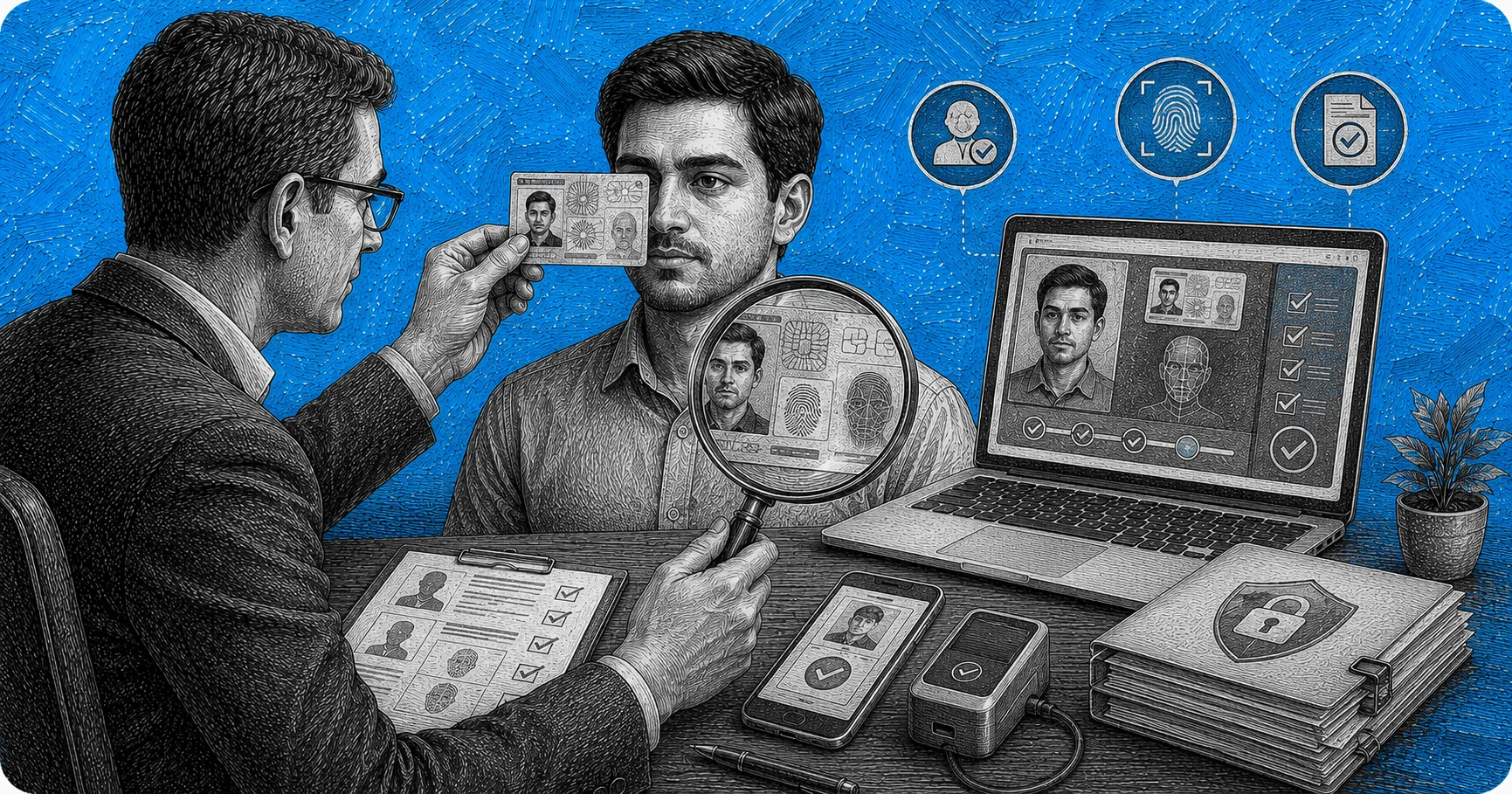
This guide covers what identity verification actually does in a hiring context, the methods behind it, how it differs from a standard background check, and what to weigh when your organization is evaluating an ID verify solution.
Why Identity Verification Became a Hiring Priority
A resume and a friendly interview used to be enough of a filter when almost every process included at least one in person touchpoint. Fully remote hiring removed that, and the gap has been noticed and exploited. Gartner's HR research practice has projected that by 2028, as many as one in four job candidate profiles worldwide could be fake, and 6% of candidates in a recent Gartner survey admitted to some form of interview fraud already (Gartner, July 2025).
At the more serious end, the FBI's Internet Crime Complaint Center has specifically warned employers about deepfake video and stolen personal information being used to secure remote positions (FBI IC3 PSA, 2022). Identity verification is the most direct countermeasure to both patterns, because it addresses the question underneath every other check: is this actually the person we think it is.
How Identity Verification Works in Hiring
Most modern ID verify systems combine a few core techniques, and it is worth understanding each before evaluating a vendor.
- Government ID document verification, checking the authenticity of a passport, driver's license, or national ID against known security features and formatting, rather than just accepting a photo of it at face value.
- Biometric facial matching, comparing a live selfie or video capture against the photo on the verified document to confirm the same person is presenting both.
- Liveness detection, confirming the face being presented is a live person in real time rather than a photo, a recording, or, increasingly, an AI generated deepfake.
- Cross session re verification, checking identity again at later stages, assessment, interview, and sometimes onboarding, rather than only once at the very start of the funnel, which closes the gap that lets a proxy step in later in the process.
Glider's own ID Verify product brings these techniques together specifically for hiring teams, and the companion ID Verify FAQs post walks through common implementation questions in detail for teams ready to evaluate it directly.
ID Verification vs a Standard Background Check
The two are complementary, not interchangeable. A background check typically looks backward, confirming employment history, education, and criminal record for the person named on the application. Identity verification confirms, in real time, that the person sitting in the interview or completing the assessment is that same named person in the first place.
A background check run against a stolen or borrowed identity will often come back clean, because it is genuinely checking a real person's history, just not the history of the person actually applying. That is precisely why identity fraud has become a distinct, named concern in HireRight's benchmark data rather than something background checks alone are expected to catch.
What to Look for in an ID Verify Solution
- Verification at more than one stage, not just a single check at account creation, so a switch later in the process still gets caught.
- Liveness and deepfake detection, not just a static photo comparison, given how much cheaper convincing synthetic video has become.
- Integration with proctoring and assessment data, so identity, behavior, and skill signals can be reviewed together rather than in separate systems, the approach behind Glider's Candidate 360 view.
- A fast, low friction candidate experience, since a verification step that feels invasive or slow can hurt completion rates for legitimate candidates just as much as it blocks fraudulent ones.
- Clear audit trails, so a flagged mismatch comes with the specific evidence attached, which matters both for internal review and for compliance documentation.
Pairing identity verification with AI proctoring during the assessment itself, and with a genuine skill assessment rather than a self reported skills list, gives hiring teams overlapping coverage instead of a single check that fraud actors only need to beat once.
Final Thought
Identity verification is no longer a niche compliance step reserved for high security roles, it is quickly becoming a baseline expectation for any hiring process that runs remotely at any real volume. The organizations getting the most value from it are not treating it as a one time gate at the top of the funnel, they are re confirming identity at the moments that matter, and pairing it with proctoring and skills data so the full picture of a candidate, not just their ID, holds together.