

Why Non Technical Skill Assessments Matter
The Challenge: Too Many Resumes, Not Enough Insight
A recent survey by SHRM found that 85 percent of hiring managers have encountered candidates who exaggerate or misrepresent their skills on resumes. The rise of AI tools that enhance resumes has only amplified this issue, increasing the risk of hiring mistakes and longer recruitment cycles. A study by CareerBuilder found that a single bad hire can cost a company nearly $15,000, and 74 percent of companies admit to hiring the wrong person for a position at some point.
How Glider AI Solves This: Non Technical Skill Assessments
Glider AI provides role specific assessments tailored to functions like marketing, sales, finance, business operations, and more. The platform uses AI technology to help ensure that only the best candidates make it through the hiring process.
Role Specific Skill Assessments
Glider AI's assessments are tailored to specific roles and responsibilities, evaluating candidates through hands on tasks and situational assessments that mirror real world challenges.
- Sales roles: develop sales strategies and handle simulated client negotiations.
- Finance roles: perform financial analysis and budgeting tasks.
- Marketing roles: create go to market strategies and analyze campaign performance.
AI Driven Performance Evaluation
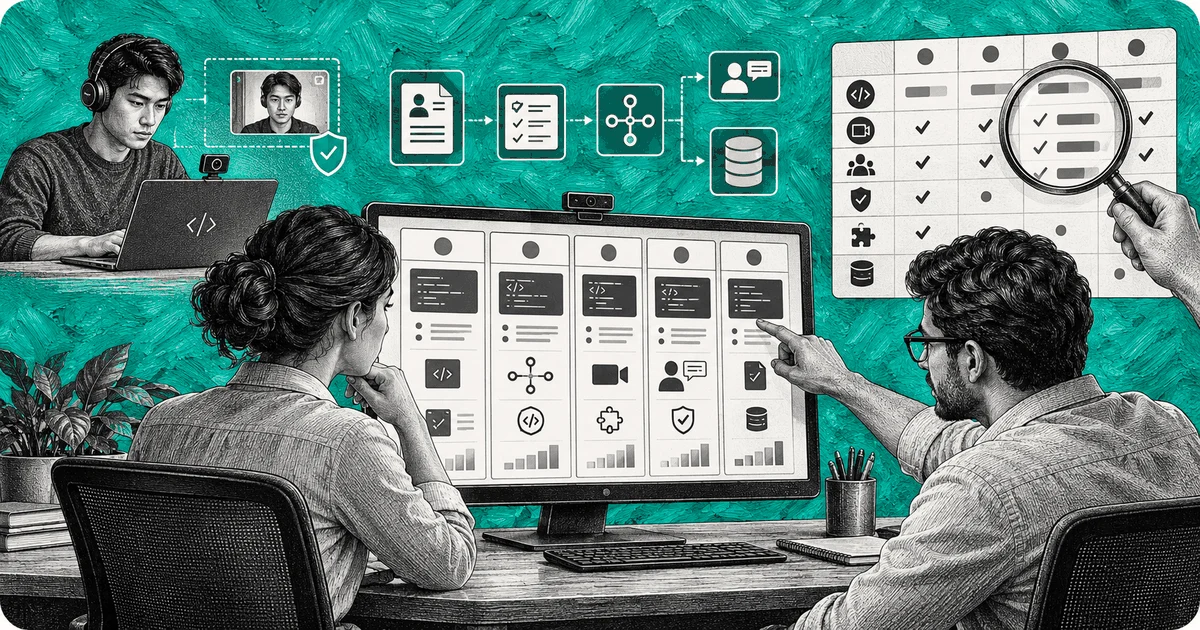
The Glider AI Skills Validation Platform assesses candidates on how well they apply their skills in practical scenarios, using AI evaluation of candidate performance to offer unbiased, objective insight.
- Data backed scoring: quantitative insight into candidate proficiency.
- Customizable benchmarks: set role specific thresholds to match company standards.
Soft Skills and Business Acumen Assessment
Beyond evaluating hard skills, meaning how well a candidate addresses the technical requirements of the job, Glider AI assesses the soft skills and business acumen that are often the key to success in non technical roles.
- Persuasion and negotiation: essential for sales and client interactions.
- Active listening and emotional intelligence: important for customer service and leadership roles.
- Critical thinking and problem solving: vital for strategic roles in business operations.
AI Proctoring: Ensuring Integrity and Authenticity
One of Glider AI's standout features is its AI proctoring technology, which helps ensure the authenticity of assessments.
- Real time monitoring: uses facial recognition, gaze tracking, and behavior analysis to detect signs of cheating.
- Automatic red flags: alerts recruiters to suspicious behavior such as looking away from the screen, using a secondary device, or receiving outside assistance.
A study by Talent Board found that 43 percent of hiring managers discovered fraudulent behavior during unproctored assessments, underscoring the importance of AI proctoring.
The Benefits of Non Technical Skill Assessments
- Improved hiring accuracy: validating practical skills reduces the risk of costly hiring mistakes.
- Faster time to hire: automated assessments speed up evaluation and shortlisting.
- Enhanced candidate experience: candidates demonstrate their skills through practical assessments rather than a resume alone.
- Objective, data backed decisions: performance metrics and AI proctoring data support informed hiring choices.
Real World Impact: A Case Study
A global business services company implemented Glider AI to improve hiring for sales and customer service roles after struggling with unqualified candidates advancing to final interview stages and wasting valuable time and resources. After adopting Glider AI, the company saw a 30 percent increase in hiring efficiency from eliminating unsuitable candidates early, a 50 percent reduction in its interview to hire ratio, and stronger alignment between job expectations and new hire performance.
Frequently Asked Questions
What is a non technical skill assessment?
A non technical skill assessment evaluates candidates for roles like sales, finance, marketing, and business operations through hands on tasks and situational exercises rather than relying on a resume alone.
Why do non technical roles need skill assessments?
Resumes for non technical roles often list skills with no concrete evidence behind them, and surveys have found a high share of hiring managers encounter candidates who exaggerate their abilities, making practical validation especially valuable.
How does AI proctoring prevent assessment fraud?
AI proctoring uses real time monitoring, including facial recognition, gaze tracking, and behavior analysis, to flag suspicious activity such as looking away from the screen or using a secondary device during an assessment.
What soft skills can be measured with a skill assessment?
Persuasion and negotiation, active listening and emotional intelligence, and critical thinking and problem solving are among the soft skills that structured, role specific assessments can help measure.
What results can companies expect from using skill assessments for non technical hiring?
Results vary by organization, but documented outcomes include meaningful gains in hiring efficiency and a lower interview to hire ratio when unqualified candidates are filtered out earlier in the process.
How Glider AI Can Help You Hire Non Technical Talent
Glider AI's skill assessment platform combines role specific tasks, soft skills evaluation, and AI proctoring to help you validate non technical candidates with data backed confidence, so your hiring team spends time confirming fit rather than screening from scratch.