

That answer sounds simple, but the reason it matters is that "background check" has become a catch all term in recruiting conversations, and a lot of TA leaders assume it already includes identity verification. It usually does not. Understanding exactly where the line falls between the two is the difference between a screening process with a real hole in it and one that actually covers the risk.
What does identity verification actually check?
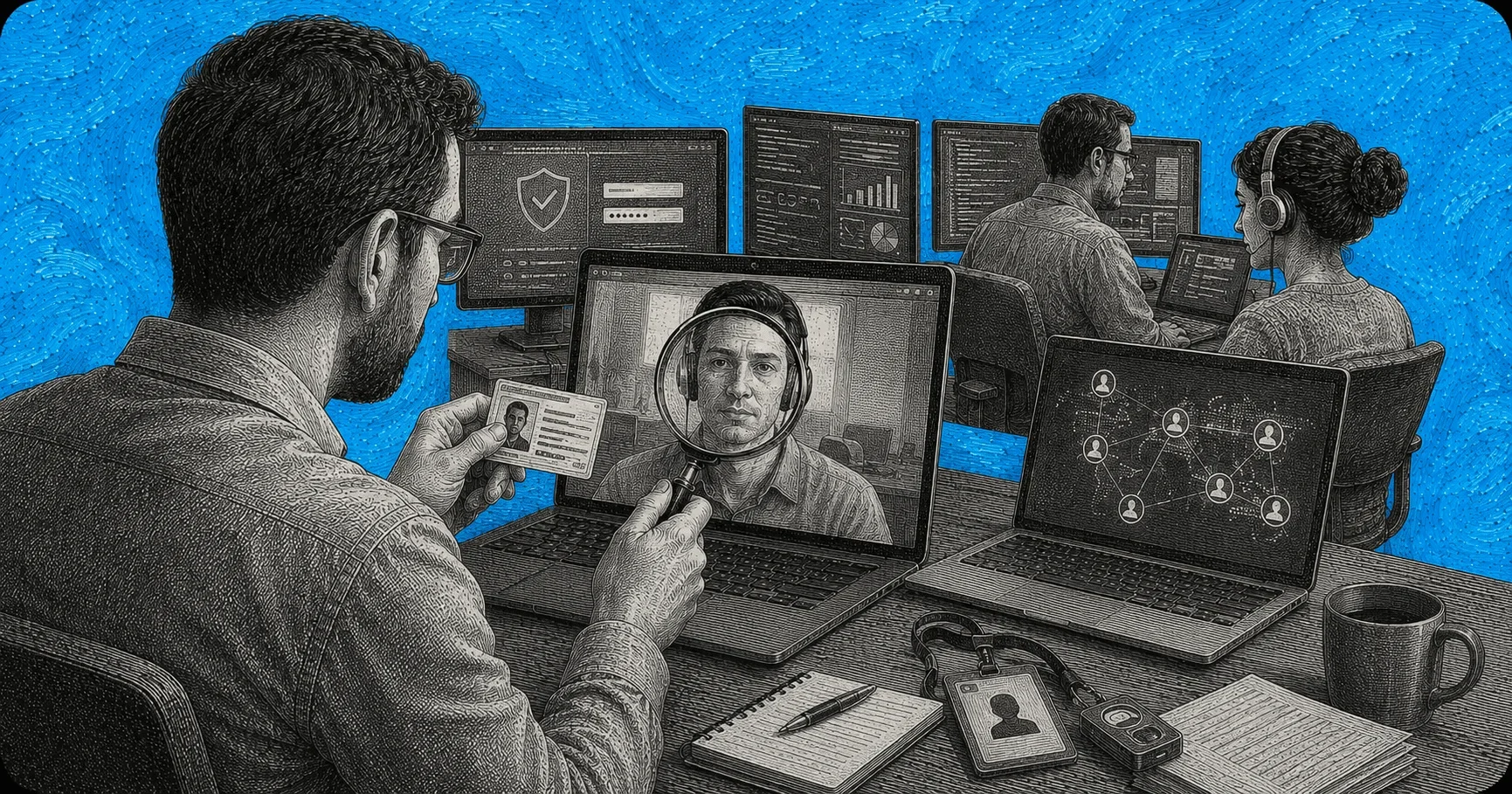
Identity verification confirms that the person applying is a real, unique individual and that they are the same person named on their submitted documents, not whether that person has a clean record. In practice, an identity verification step like Glider's ID Verify typically checks:
- Document authenticity: whether a government ID, passport, or driver's license has the security features, fonts, and structure of a real, unaltered document rather than a template or edited image
- Biometric face match: comparing a live selfie or short video against the photo on the submitted ID
- Liveness detection: confirming the face in front of the camera is a live human being at that moment, not a photo, recording, video call injection, or AI generated face
- Data cross checks: comparing the name, date of birth, and document number against issuing authority databases where available
None of that involves a criminal record, an employer, or a school. It is entirely about confirming the person is who the documents say they are, right now, in real time. That is the exact function Glider's identity verification product is built around, and why it typically runs early in the funnel, often before an interview is even scheduled.
What does a background check actually check?
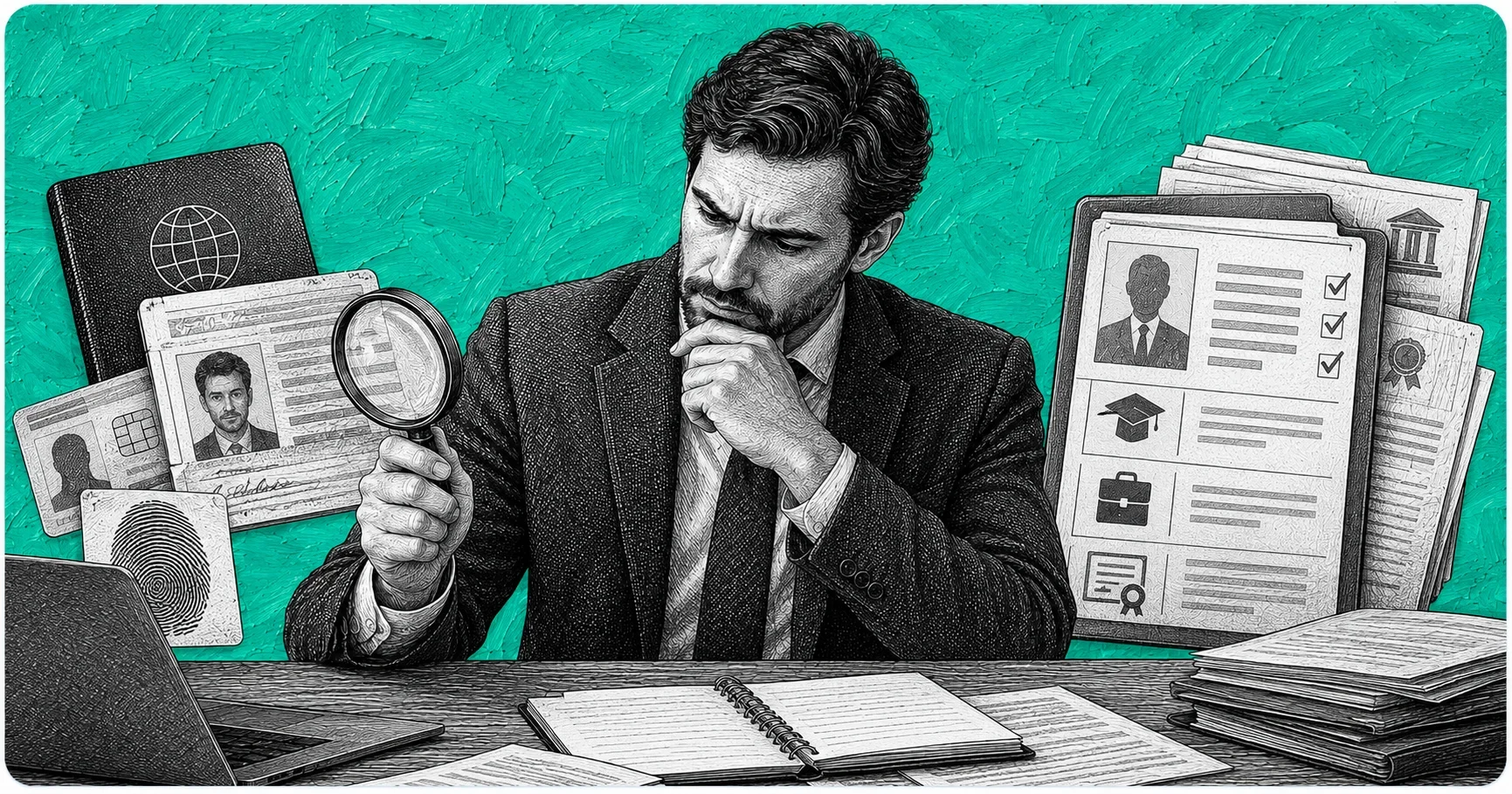
A background check assumes the identity is already correct and instead investigates that person's history and record. A standard employment background check usually covers some combination of:
- Criminal record checks at the county, state, and federal level
- Employment history verification, confirming past employers and dates
- Education verification, confirming degrees and institutions
- Reference checks
- Motor vehicle records for driving roles
- Credit history for roles handling finances
- Sanctions, watchlist, or global regulatory list screening
Every one of those searches depends on one input being correct: the name, date of birth, and identifying details the candidate provided. If that input is wrong, either through an honest clerical error or deliberate fraud, the background check runs a clean search against the wrong person's history, or against no real history at all, and comes back looking clean.
Where do identity verification and background checks overlap?
The overlap is narrower than most hiring teams assume. Both processes touch a government issued ID at some point (identity verification analyzes the document itself, while a background check uses the details on it as a search input), and both are usually run as a condition of a formal offer. Beyond that, they are checking almost entirely different things. Identity verification is a moment in time confirmation of a person's identity. A background check is a retrospective look at that person's documented history. Treating them as interchangeable, or assuming one covers the other, is where the real risk shows up.
What blind spots does identity verification catch that a background check misses?
A background check cannot catch a candidate who is not who they claim to be, because it is built to search records under a name, not to confirm a face matches a document. This is exactly the blind spot behind several well documented fraud cases. In one incident Glider has written about, a company nearly hired a fraudulent candidate tied to a North Korea based scheme using a stolen or borrowed identity, a case where standard background checks did not flag anything because the underlying documents and search inputs looked legitimate on paper.
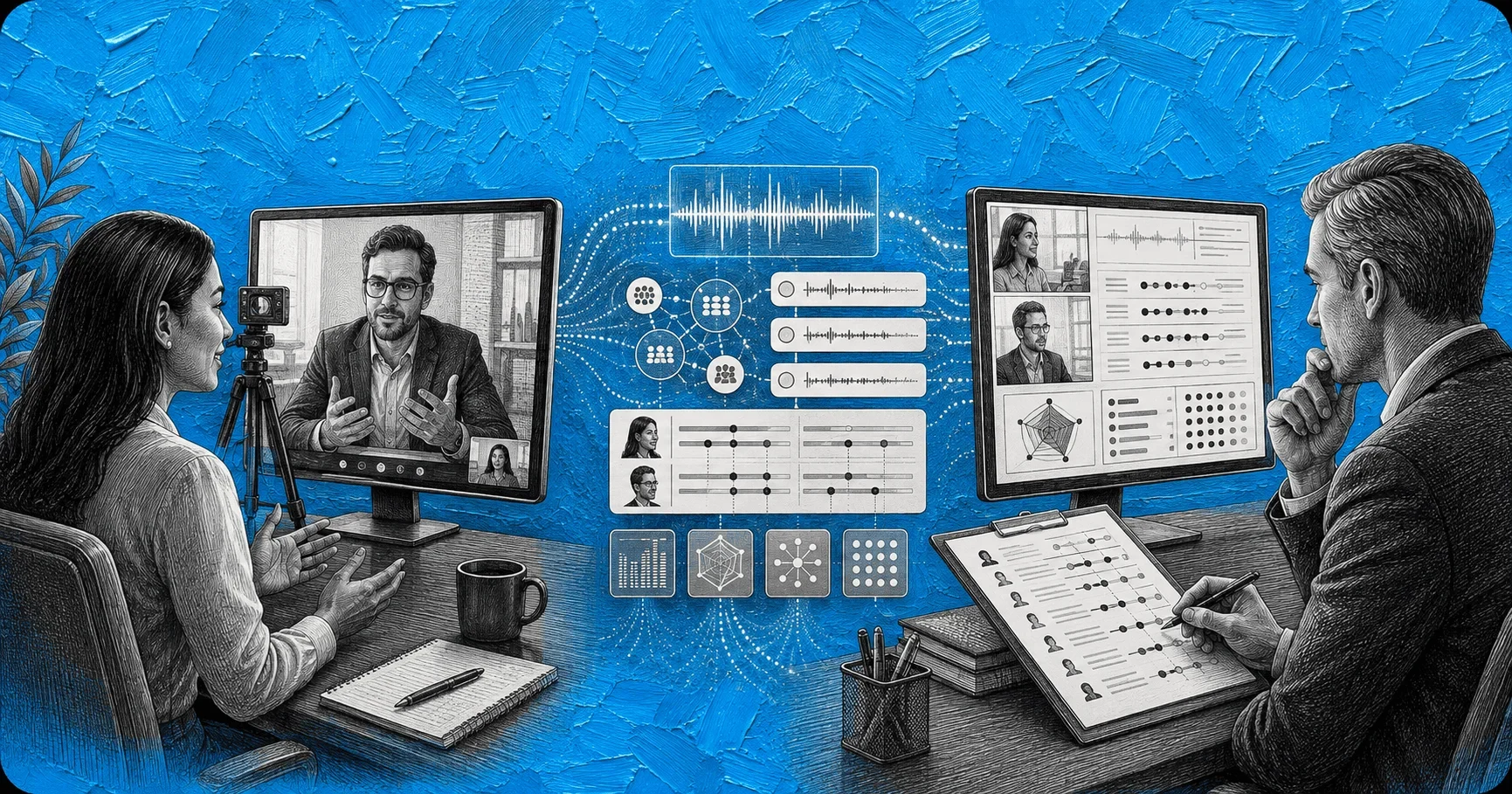
Remote hiring has also opened the door to a newer version of this same blind spot: deepfake generated candidates who use real time face swapping or synthetic video during interviews to present as someone they are not, sometimes so that one person can be paid for a role while a different, less qualified person actually shows up and does the work. A background check run on the name that person supplied will often come back clean, because the records are real, they just belong to someone who is not the person actually being hired.
What blind spots does a background check catch that identity verification misses?
Identity verification confirms a person is real and matches their ID, but it says nothing about what that real person has actually done. A confirmed, genuine identity can still belong to someone with an undisclosed felony conviction, a fabricated resume, a revoked professional license, or a history of terminations for cause. None of that shows up in a face match or a document scan. This is exactly why a bank recruiting fraud case that Glider covered in a case study on hiring fraud in banking required looking at both layers, the identity of the candidate and their actual employment and conduct history, to catch the full scope of the problem.
So do you need both?
Yes, for most roles the two checks are complementary, not redundant, and skipping either one leaves a specific, predictable gap. A useful way to think about sequencing:
- Run identity verification early, often at application or before scheduling an interview, so you are evaluating and interviewing an actual, confirmed person rather than spending recruiter time on someone who is not real
- Run the background check later, typically after a conditional offer, once you already know the identity behind the application is genuine, so the record search is actually attached to the right person
- For high risk, financial, healthcare, or fully remote roles, treat both as required rather than optional, since these roles carry the highest cost if either check is skipped
The cost argument against running both rarely holds up once a single fraud incident is weighed against it. Rerunning a background check after discovering an identity was fabricated, dealing with the fallout of an unqualified or malicious hire, or explaining to leadership why a role went to someone who was never actually vetted, all cost far more than the incremental price of an identity check on the front end.
To see where your current mix of checks leaves gaps, take the Hiring Risk Index.
How Glider approaches this
Glider treats identity verification and background style screening as two connected layers of the same underlying question: is this candidate actually who and what they claim to be? ID Verify handles the identity layer with document authenticity checks, biometric face matching, and liveness detection built directly into the hiring workflow, so the confirmation happens before a company invests recruiter time or background check spend in a candidate.
From there, standard background and reference checks can run against a confirmed identity, closing the loop rather than operating in isolation. Read the full ID Verify FAQ for process and cost details beyond what is covered here.