

Identity Verification in Hiring: A Step by Step Overview
Step One: Information Collection
The process starts when a candidate provides basic identifying information as part of their application, name, contact details, and the government issued identification they will later be asked to verify. This step sets the baseline that later steps will check against.
Step Two: Document Verification
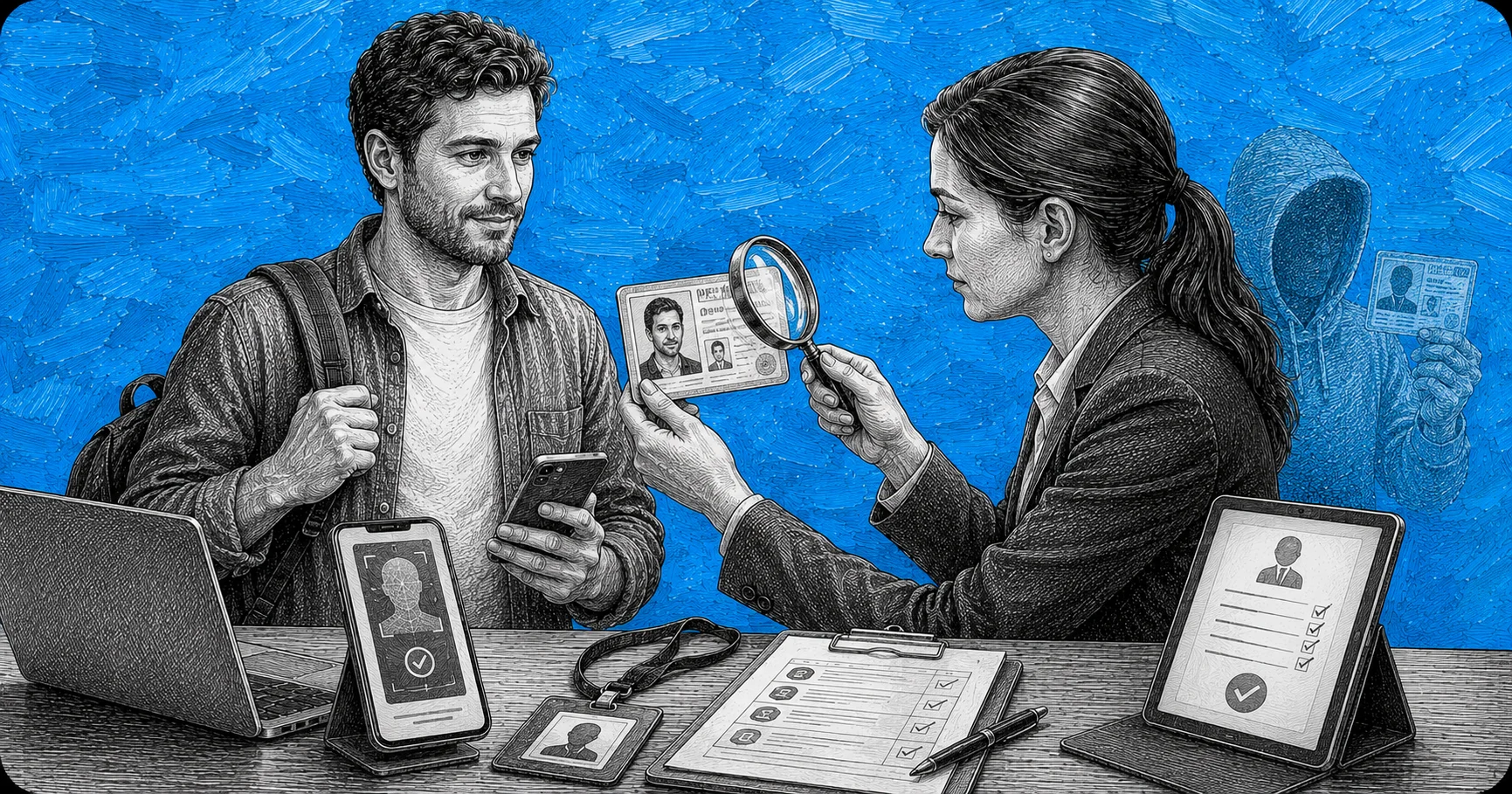
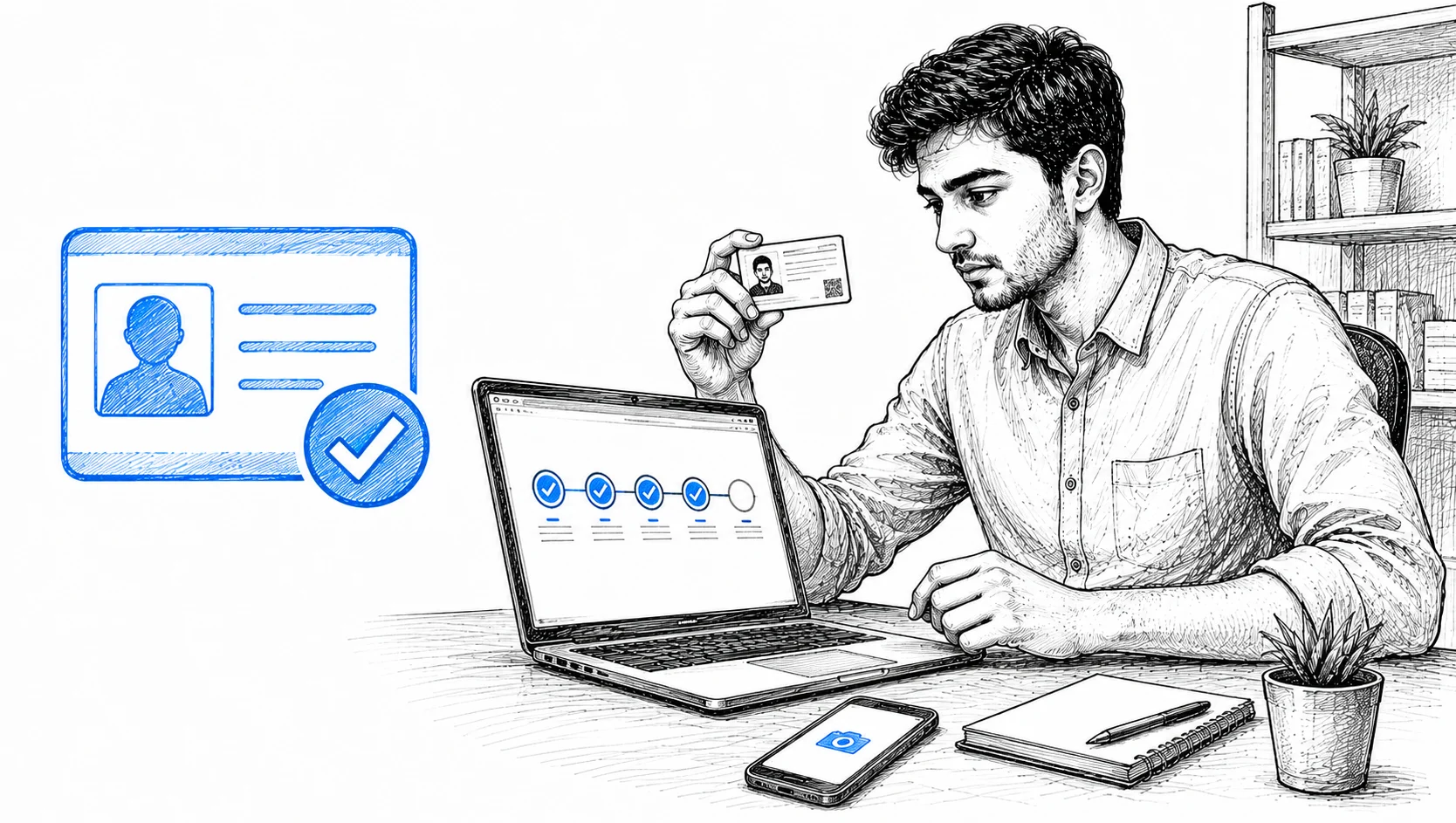
The candidate submits a photo or scan of a government issued ID, a passport, driver's license, or national identity card. The verification system checks the document itself for signs of tampering or forgery, confirms the document format matches a known valid template for that issuing country, and extracts the identifying details for comparison against what the candidate provided at application.
Step Three: Biometric Matching and Liveness Detection
The candidate is asked to take a live selfie or short video, which is compared against the photo on their submitted document to confirm the same person is present in both. Liveness detection specifically checks that this is a live person in the moment, not a photo of a photo or a prerecorded video, which is what closes the door on simple photo based impersonation attempts.
Step Four: Cross Referencing and Risk Scoring
The system checks the extracted identity details against independent data sources where available, and looks for risk signals such as a location that does not match the claimed address, a document type unusual for the claimed nationality, or patterns previously associated with fraud attempts. This step is where most fabricated or synthetic identities get flagged, since a single convincing document is easier to fake than a document that is also internally and externally consistent.
Step Five: Ongoing and Day One Confirmation
Verification does not have to end once an offer is accepted. Many implementations repeat a lighter identity check at the point someone actually starts work, confirming the person who shows up on day one is the same person who was verified and interviewed, which specifically closes the door on bait and switch schemes where a different, unverified person shows up to actually perform the job. Glider's own ID Verify solution builds this ongoing confirmation into the process rather than treating verification as a single, one time gate.
How This Differs From a Background Check
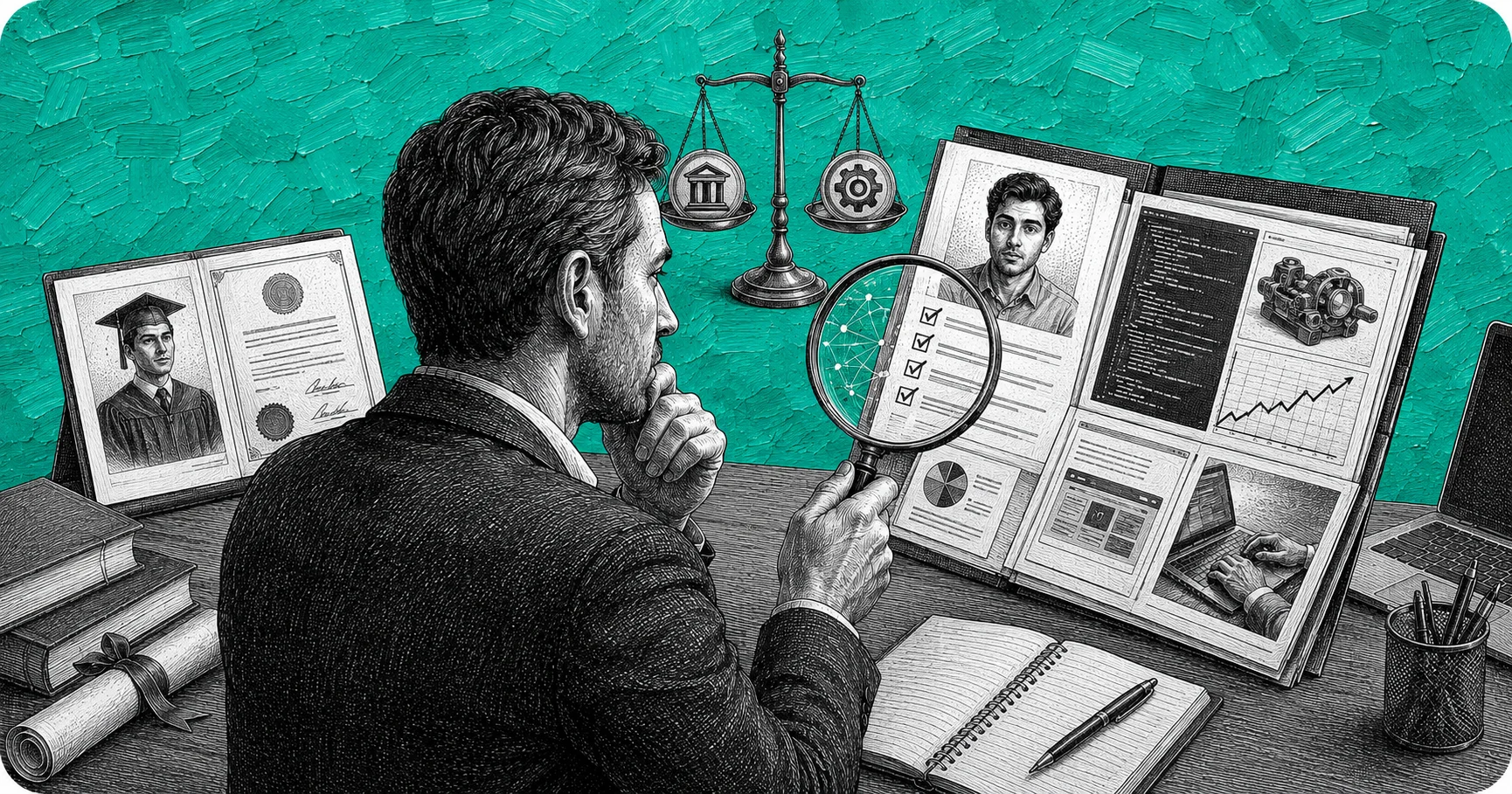
A background check looks backward, confirming employment history, education, and criminal record for a person whose identity is assumed to be accurate. Identity verification looks at the present moment, confirming the person going through the process is a real, consistent individual in the first place. Skipping identity verification and relying on a background check alone means an organization may be running an extremely thorough history check on someone who is not actually who they claim to be.
Where This Fits Alongside Skills Testing
Identity verification answers who the candidate is. It does not answer whether they can do the job, that is what a structured skill assessment platform is for, and pairing the two closes both the identity gap and the competency gap that resume review alone tends to miss.
Final Thought
Identity verification in hiring is not a single click gate at the top of the funnel, it is a short sequence of checks, document, biometric, cross reference, and ongoing confirmation, each closing a different way a fraudulent identity could otherwise get through.