

This matters more than it used to. Remote hiring removed the in person cues that once made an obviously fake credential easier to catch in conversation. High volume and contingent hiring programs move fast enough that a manual credential check can feel like friction nobody wants to add. And generative AI has made forging a transcript, a diploma seal, or even a university verification email dramatically easier than it was five years ago. The result is a widening gap between how confidently companies rely on a candidate's stated education and how rarely anyone actually confirms it.
What Is a Diploma Mill?
A diploma mill is an entity that issues degrees or certificates without requiring the coursework, instruction time, or academic rigor a legitimate accredited institution would require, usually in exchange for a payment and minimal or no actual work. Some diploma mills are crude and easy to spot once you look closely. Others are sophisticated operations with professional looking websites, fabricated accreditation seals, working phone lines staffed by people who will "confirm" a graduate's enrollment, and course catalogs copied from real universities.
The defining feature is not how convincing the website looks. It is whether the institution is recognized by a legitimate accrediting body. In the United States, that means accreditation recognized by the Department of Education or the Council for Higher Education Accreditation (CHEA). A school that is not listed with either, or that claims accreditation from an obscure "accrediting" body that itself has no government or peer recognition, is very likely a diploma mill regardless of how official its paperwork looks.
Why Diploma Mills and Fake Credentials Are a Growing Problem
Three trends have converged to make this a bigger risk than it was even a few years ago:
- AI made forgery cheap. Generating a realistic looking transcript, diploma, or even a fake verification email from a "registrar" now takes minutes and requires no design skill.
- Remote hiring removed friction that used to catch fraud. Video interviews and asynchronous assessments cut down on the small, unscripted moments where an inconsistent credential story used to surface naturally.
- Volume hiring makes shortcuts tempting. Teams filling dozens or hundreds of roles a month often treat credential checks as optional or reserved for senior roles only, which is exactly the gap candidates using diploma mills are counting on.
Glider AI's own assessment data backs this up: fraud attempts across proctored assessments have climbed sharply in recent hiring cycles, and candidate fraud is showing up at meaningfully higher rates across millions of assessments, not just in a handful of isolated cases. A fake diploma sits on the same spectrum as impersonating someone else on a coding test or having a third party sit an assessment on a candidate's behalf. It is a credibility problem, and it rarely shows up alone.
Warning Signs of a Fake Diploma or Diploma Mill
Before you get to formal verification, a few red flags should already put you on alert:
- The degree was earned unusually fast. A bachelor's degree completed in a few months, or a master's awarded in weeks, is a classic diploma mill pattern.
- The school's name is suspiciously close to a real one. Diploma mills often pick names one word away from well known universities, hoping a quick skim will not catch the difference.
- Tuition is described as a flat, one time fee for "life experience credit." Legitimate institutions charge per credit hour or per term, not a single lump sum to convert prior work history into a degree.
- There is no verifiable physical campus or the address maps to a mailbox service. A real, accredited institution has a real, checkable address.
- The institution cannot be found in accreditation databases. This is the single most reliable check, covered in detail below.
- The candidate is unusually vague or defensive about basic details like which building their program was housed in, who their advisor was, or what the campus was like.
None of these alone proves fraud, since a legitimate accelerated program can share a few surface traits with a diploma mill. That is exactly why direct verification matters more than pattern matching alone.
How to Verify Education Claims Before You Hire
A reliable process to verify education claims has four steps, and skipping any of them is where most hiring teams get caught out.
1. Confirm the institution is accredited. Search the school's name in the Department of Education's accredited institution database or the CHEA directory. If it does not appear in either, treat that as a serious red flag rather than an administrative technicality. Watch for schools that list accreditation from a body that is not itself recognized: a fake "accreditor" is one of the most common tricks diploma mills use to look legitimate on paper.
2. Verify enrollment and degree completion directly with the source. Contact the school's registrar directly, or use a service like the National Student Clearinghouse, which many accredited US institutions use for degree verification requests. Do not rely on a phone number or email address the candidate provides for this purpose. Diploma mills frequently staff their own "verification line" to confirm whatever a graduate claims.
3. Cross check the details, not just the headline claim. Confirm the degree type, major, and graduation date, not just that the person attended. Candidates sometimes round up an incomplete degree to a completed one, or shift a graduation year to smooth over an employment gap. These are usually resume exaggeration rather than diploma mill fraud, but they still need to be caught and addressed consistently.
4. Build verification into your standard process, not just your suspicious cases. The teams that catch the most fraud are the ones that verify education claims as a routine step for roles where the credential is actually a job requirement, rather than only investigating when something already feels off. A consistent, documented process also protects you legally: singling out specific candidates for extra scrutiny based on a hunch, rather than a standard policy applied evenly, is where hiring teams run into risk.
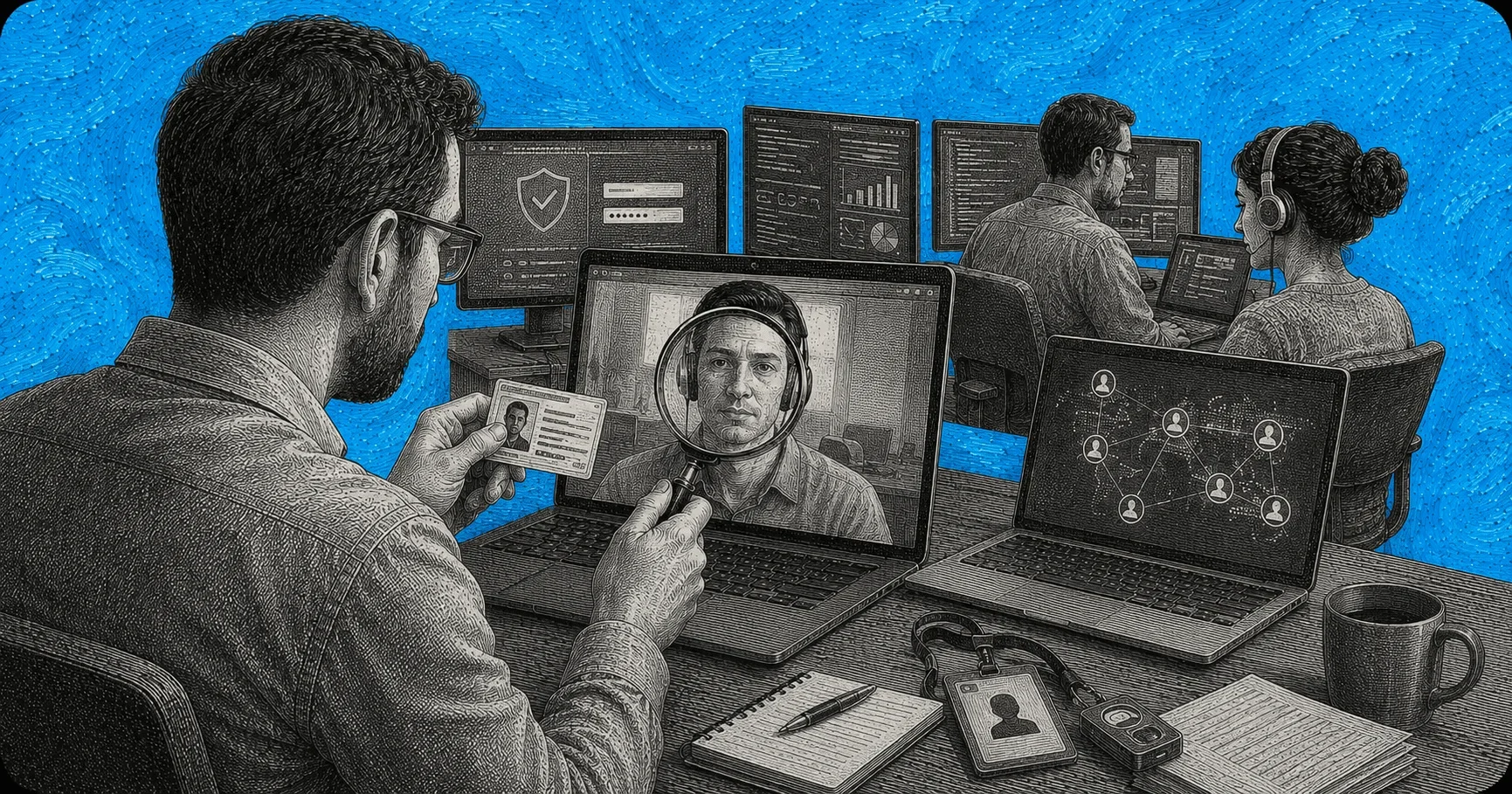
This is the same logic Glider AI applies to identity more broadly. ID Verify exists specifically to confirm a candidate is who they say they are before an offer goes out, and a full identity verification process for hiring treats confirming identity as the first checkpoint that everything else, including education claims, depends on. You cannot meaningfully verify a degree belongs to a candidate if you have not first confirmed the candidate is who their application says they are.
What to Do If You Discover a Fake Credential
If verification turns up a genuine diploma mill or a fabricated degree, handle it consistently and document it:
- Pause the process rather than reacting immediately. Confirm the finding with a second verification attempt before taking action, since verification services occasionally return incomplete or delayed results that can look like a mismatch.
- Apply the same standard to every candidate. If your policy is to rescind an offer for a fabricated credential, apply it every time a fabricated credential is confirmed, not selectively.
- Document the verification steps taken and the result. This protects your company if the decision is ever questioned later.
- Separate a fabricated degree from an honest mistake. A candidate who misremembers a graduation year is different from one who submitted a diploma from an entity that does not appear in any accreditation database. Your response should reflect that difference.
How Diploma Mills Connect to the Larger Candidate Fraud Problem
A fake diploma is rarely an isolated event. Candidates willing to fabricate an education credential are often willing to cut corners elsewhere in the process too, whether that means having someone else complete a skills assessment, using AI generated deepfake tools to misrepresent who is actually in the interview, or building an entirely fabricated identity around remote work fraud. This is why glider.ai treats credential fraud, identity fraud, and assessment fraud as one connected problem rather than three separate ones. Once education is verified, AI reference checking is the natural next layer, confirming the work history around that credential the same way this page recommends confirming the credential itself.
AI proctoring closes a related gap by confirming that the person taking a skills assessment is the same person who applied and is completing the work themselves, using the same verification mindset this post recommends for education claims: do not accept a self reported claim at face value when a direct, low friction way to confirm it exists.
Reducing Reliance on Unverified Credentials With Skills Based Hiring
The most durable fix is not just catching more fake diplomas. It is reducing how much hiring decisions depend on a credential that is easy to fake in the first place. Skills based hiring shifts weight toward what a candidate can actually demonstrate, through structured assessments and proctored, verified evaluations, rather than a degree line on a resume that nobody has confirmed. A candidate who can demonstrably do the job under proctored conditions presents far less risk than one whose only qualification on file is an unverified credential, even before you get to the question of whether that credential is real at all.
That does not mean education credentials stop mattering for roles that genuinely require them. It means they should be one verified signal among several, not the only signal a hiring decision rests on.