


How much does a bad hire actually cost your business?
The U.S. Department of Labor puts the floor at roughly 30 percent of a bad hire's expected first year earnings, a figure that only covers direct replacement costs. SHRM's benchmarking research shows the real number climbs sharply with seniority: an entry level or hourly mis hire typically costs 50 to 75 percent of annual salary, a mid level technical or managerial mis hire runs 100 to 150 percent, and a bad hire at the executive level can cost 200 to 213 percent of annual salary once severance, executive search fees, and lost strategic time are included.
CareerBuilder's survey work puts a more concrete dollar figure on the entry to mid level range, with companies reporting an average loss of about 17,000 dollars per bad hire, and executive level mis hires running as high as 240,000 dollars. In the same research, roughly three out of every four employers admit to having made at least one bad hire, which means this is not a rare edge case. It is a recurring line item most hiring teams simply have not measured.
None of those figures include the softer costs that compound the damage. LinkedIn research finds that 85 percent of HR professionals say a bad hire hurts team morale and productivity, not just the budget. Gallup's engagement data shows that disengaged employees, a common byproduct of managing around a bad hire, cost roughly 3,400 dollars for every 10,000 dollars of salary in lost productivity. And managers who inherit a struggling hire report spending about 17 percent more of their own time managing the fallout, time that is not going toward the rest of the team.
Why does candidate fraud make a bad hire even more expensive?
Candidate fraud raises the cost of a bad hire because it adds security, legal, and trust damage on top of the standard replacement and productivity costs, and it is currently growing faster than most hiring teams' ability to detect it. Gartner projects that one in four candidate profiles could be fake by 2028, and 39 percent of candidates already admit to using AI somewhere in their application, most commonly to write resume text or cover letters. Capterra found that 83 percent of job seekers who use AI in their job search admit to exaggerating or lying about their skills.
The financial exposure from this specific category of bad hire is significant on its own. Checkr's research found that 23 percent of hiring managers reported losses exceeding 50,000 dollars from hiring fraud in the past year, and 10 percent reported losses over 100,000 dollars, on top of whatever the standard bad hire cost would have been. The same research found that 35 percent of hiring managers have had someone other than the actual applicant show up to a virtual interview, and 17 percent have encountered a candidate using deepfake technology to alter their appearance on video, according to separate Resume Genius and Pollfish research. Remote roles carry even more exposure: Huntress and Endorsed found that fully remote positions are roughly 10 times more likely to receive a fraudulent application than roles with any in person component.
Glider AI's own screening data mirrors this trend. Across millions of assessments, fraud attempts have climbed year over year rather than leveling off, and one widely reported case involving organized candidate fraud tied to North Korea showed just how far a fraud ring will go, using deepfaked interviews and stolen identities to get hired into remote technical roles at legitimate companies, in a scheme the FBI later warned employers about directly.
What are the hidden costs most companies never calculate?
The hidden costs of a fraud driven bad hire fall into three buckets most budgets do not have a line item for: security exposure, compliance risk, and the erosion of trust in the hiring process itself. A resume that overstates a skill leads to a slow ramp and a disappointing quarter. A fabricated identity or a proxy interviewer who is not the person actually doing the work can lead to a data breach, a compliance violation, or in the more extreme cases the kind of nation state infiltration schemes federal agencies have publicly warned about.
There is also a quieter cost: once a hiring team discovers one fraud case, they tend to slow down and second guess every future candidate, which drags out time to fill across the board. That drag is rarely counted alongside the direct loss, but it shows up in every requisition that now takes longer to close.
How do you calculate the cost of a bad hire for your own team?
A workable estimate is the hire's fully loaded annual salary multiplied by a cost factor based on seniority (0.5 to 0.75 for entry level roles, 1.0 to 1.5 for mid level and technical roles, 2.0 or higher for executive roles), plus the hard costs of recruiting and onboarding the replacement, plus an estimate of lost output for the months the role was underperforming or vacant. For a 70,000 dollar mid level role, that alone lands in the 70,000 to 105,000 dollar range before you add a single dollar for security remediation, legal review, or the time spent unwinding whatever the fraudulent hire touched. Run that math once against your own recent mis hires and the case for tighter screening upfront tends to make itself.
Before you run the numbers, the Hiring Risk Index shows where your own process is most exposed. It takes about two minutes and returns a risk tier with priority controls.
How can you prevent candidate fraud before it turns into a bad hire?
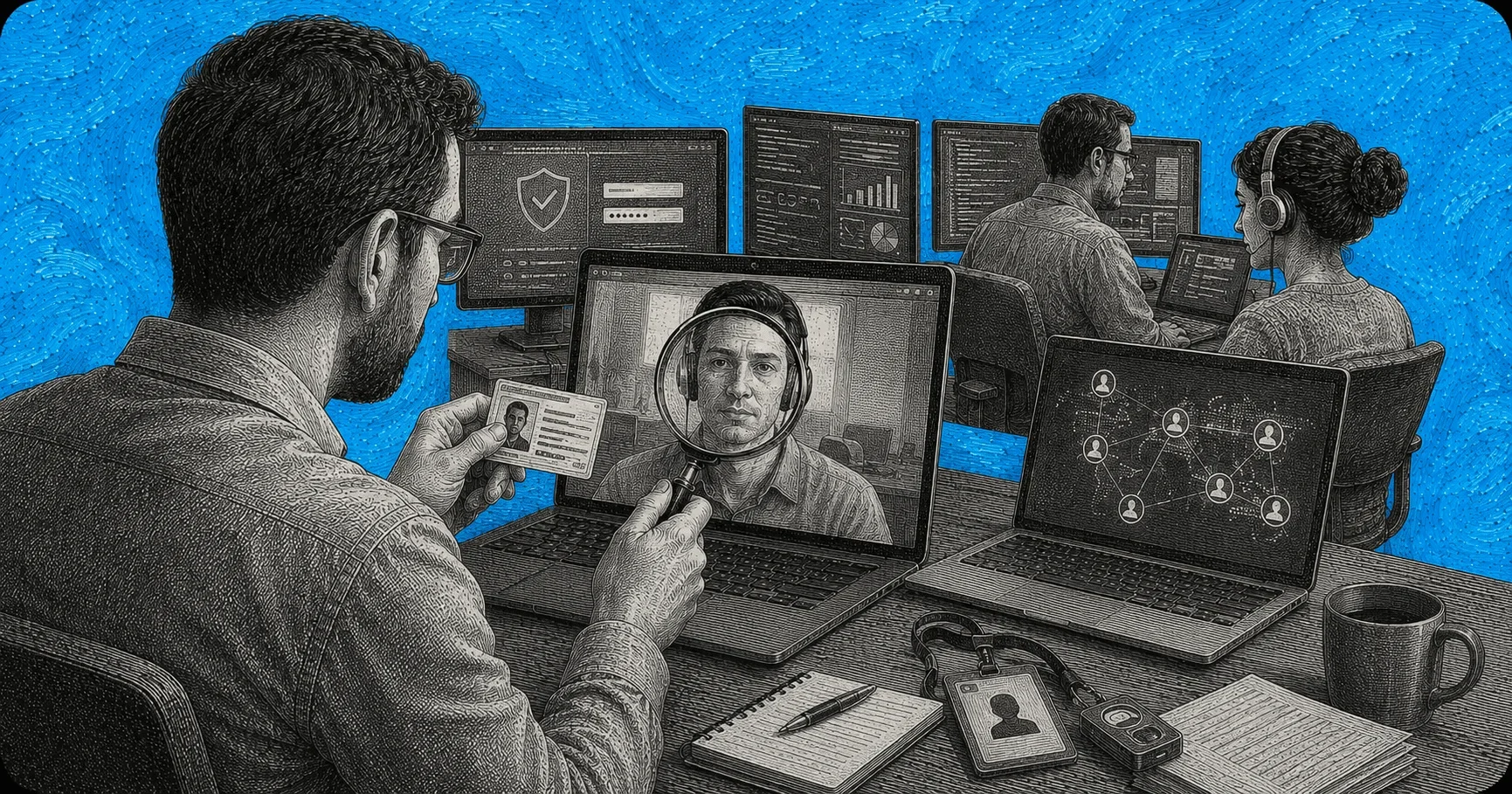
The most effective fixes target the exact points where fraud gets through today: an unverified identity, an unverified skill claim, and an unmonitored assessment or interview. Identity verification that checks a government issued ID against a live biometric match closes the door on stolen identities and proxy candidates before they ever reach a hiring manager. Skills assessment software that tests a candidate's actual ability, rather than trusting a resume line, closes the gap that lets 83 percent of AI assisted job seekers exaggerate their skills without ever being tested on them. AI proctoring during assessments and interviews adds a layer of monitoring that flags impersonation, device switching, and other integrity red flags in real time, rather than after the person is already on payroll.
Together, these three controls address the same fraud categories driving the cost data above: fabricated skills, proxy interviews, and stolen or synthetic identities. Teams that already run a skills based hiring process have a natural place to add these checks, since the process already centers on verified ability rather than self reported claims.